


A simple cognitive task intervention to prevent intrusive memories after trauma in patients in the Emergency Department: A randomized controlled trial terminated due to COVID-19
- PMID: 33971951
- PMCID: PMC8107806
- DOI: 10.1186/s13104-021-05572-1
A simple cognitive task intervention to prevent intrusive memories after trauma in patients in the Emergency Department: A randomized controlled trial terminated due to COVID-19
Abstract
Objective: This randomised controlled trial (RCT) aimed to investigate the effects of a simple cognitive task intervention on intrusive memories ("flashbacks") and associated symptoms following a traumatic event. Patients presenting to a Swedish emergency department (ED) soon after a traumatic event were randomly allocated (1:1) to the simple cognitive task intervention (memory cue + mental rotation instructions + computer game "Tetris" for at least 20 min) or control (podcast, similar time). We planned follow-ups at one-week, 1-month, and where possible, 3- and 6-months post-trauma. Anticipated enrolment was N = 148.
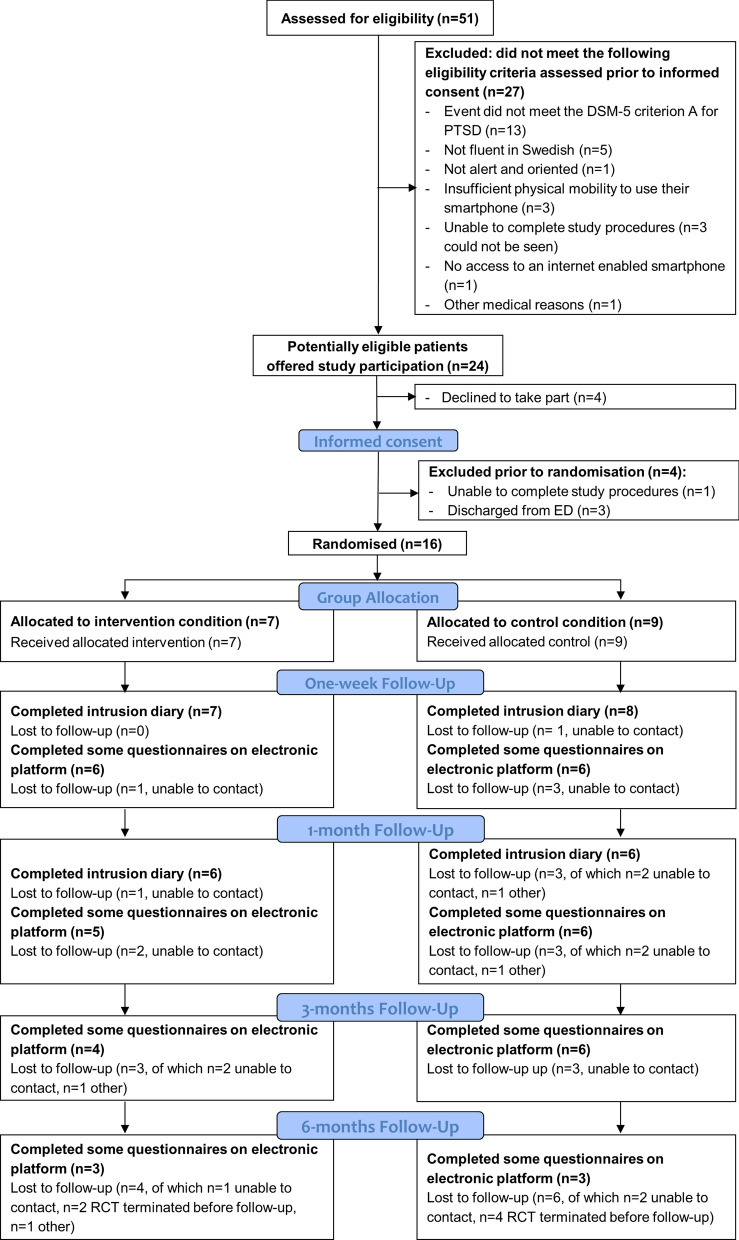
Results: The RCT was terminated prematurely after recruiting N = 16 participants. The COVID-19 pandemic prevented recruitment/testing in the ED because: (i) the study required face-to-face contact between participants, psychology researchers, ED staff, and patients, incurring risk of virus transmission; (ii) the host ED site received COVID-19 patients; and (iii) reduced flow of patients otherwise presenting to the ED in non-pandemic conditions (e.g. after trauma). We report on delivery of study procedures, recruitment, treatment adherence, outcome completion (primary outcome: number of intrusive memories during week 5), attrition, and limitations. The information presented and limitations may enable our group and others to learn from this terminated study. Trial registration ClinicalTrials.gov: NCT04185155 (04-12-2019).
Keywords: Behavioural intervention; COVID-19; Emergency Department; Intrusive memories; Prevention; Psychological trauma; RCT; Terminated study.
Conflict of interest statement
EAH reports serving on the board of trustees of the charity MQ: Transforming Mental Health but receives no remuneration for this role. EAH receives royalties from books and occasional fees for workshops and invited addresses; receives occasional consultancy fees from the Swedish agency for health technology assessment and assessment of social services. LI is on the British Association for Behavioural and Cognitive Psychotherapies Scientific Committee and via this role is funded to attend the Annual Conference. The other authors have no conflicts of interests to declare.
References
-
- Kanstrup M, Singh L, Goransson KE, Widoff J, Taylor RS, Gamble B, et al. Reducing intrusive memories after trauma via a brief cognitive task intervention in the hospital emergency department: an exploratory pilot randomised controlled trial. Transl Psychiatry. 2021;11(1):30. doi: 10.1038/s41398-020-01124-6. - DOI - PMC - PubMed
-
- American Psychiatric Association. Diagnostic and statistical manual of mental disorders: DSM-5. Fifth edition. ed: Arlington: American Psychiatric Publishing; 2013.
-
- Singh L, Espinosa L, Ji JL, Moulds ML, Holmes EA. Developing thinking around mental health science: the example of intrusive, emotional mental imagery after psychological trauma. Cogn Neuropsychiatry. 2020;54:1–16. - PubMed
Publication types
MeSH terms
Associated data
Grants and funding
LinkOut - more resources
Full Text Sources
Other Literature Sources
Medical
