


Patients with rare endocrine conditions have corresponding views on unmet needs in clinical research
- PMID: 33534110
- PMCID: PMC8016771
- DOI: 10.1007/s12020-021-02618-z
Patients with rare endocrine conditions have corresponding views on unmet needs in clinical research
Abstract
Purpose: European Reference Network on Rare Endocrine Conditions' (Endo-ERN) mission is to reduce and ultimately abolish inequalities in care for patients with rare endocrine conditions in Europe. This study assesses which themes related to rare endocrine conditions are prioritized by patients for clinical research.
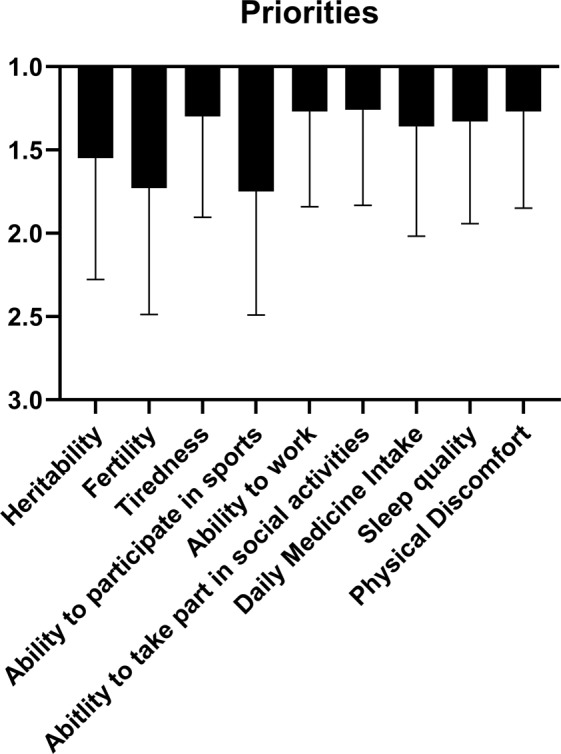
Methods: A survey was developed, translated into 22 different European languages, and distributed to patients with rare endocrine conditions. Patients were asked to give priority scores to listed prespecified topics: fertility, heritability, tiredness, daily medicine intake, sleep quality, physical discomfort, and ability to work, partake in social life, and sports. They were also asked to suggest further important areas for research in open fields.
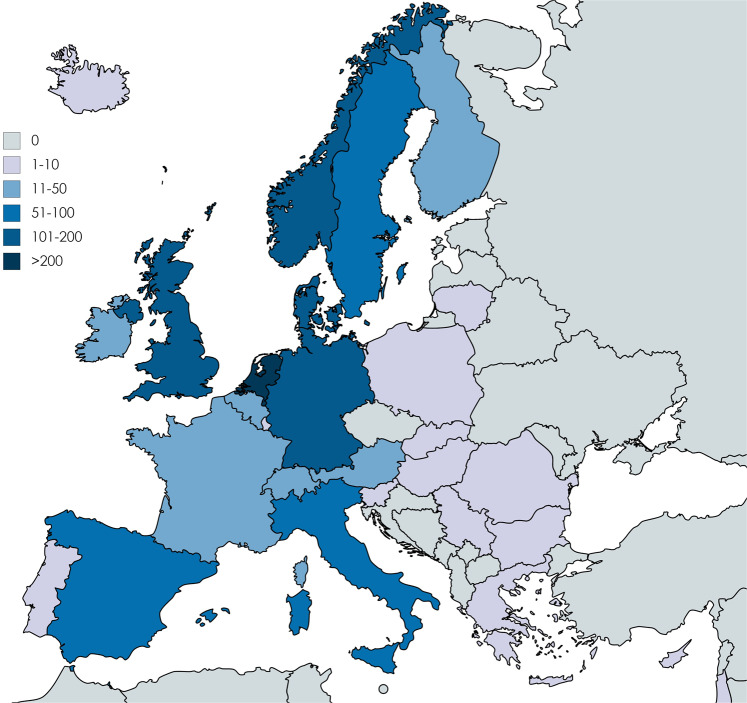
Results: After data cleaning, 1378 survey responses were analyzed. Most responses were received from Northern (47%) and Western Europeans (39%), while Southern (11%) and Eastern Europe (2%) were underrepresented. Respondents were most interested in research concerning ability to participate in social life and work. Patients suggested key areas to work: long-term side effects of medical treatments and quality of life. Some priorities differed between disease groups, both for prespecified and open topics and reflected aspects of patients' individual conditions.
Conclusions: With this large survey, Endo-ERN gained insight into patients' unmet needs in scientific research. Patients prioritized research on ability to work and participation in social activities, though needs differ between the disease groups. Clinical experts should incorporate the results of this survey into the design of future studies on rare endocrine conditions. We aim to utilize these results in designing patient-reported outcome measures for the disease areas covered by Endo-ERN.
Keywords: Endo-ERN; Endocrinology; Patient perspective; Rare disease; Research.
Conflict of interest statement
The authors declare that they have no conflict of interest.
Figures
References
-
- F. de Vries, M. Bruin, A. Cersosimo, C. N. van Beuzekom, S. F. Ahmed, R. P. Peeters, N. R. Biermasz, O. Hiort, A. M. Pereira. An overview of clinical activities in Endo-ERN: the need for alignment of future network criteria. Eur J Endocrinol. 183(2), 141–148 (2020) - PubMed
-
- Endo-ERN. Overview of specific expertise (2020), https://endo-ern.eu/activities/research-activities/
-
- Endo-ERN. Research activities (2020), https://endo-ern.eu/activities/research-activities/
-
- UNSD. UNSD methodology—geographic regions (2020), https://unstats.un.org/unsd/methodology/m49/
Publication types
MeSH terms
LinkOut - more resources
Full Text Sources
Other Literature Sources
Medical
